
In an era characterized by rapid technological advancements and an overwhelming influx of information, fostering critical thinking skills in children has never been more essential. As the foundation of effective problem-solving and decision-making, critical thinking empowers young minds to navigate the complexities of modern life with confidence and discernment. This article delves into the strategic approaches and practical techniques that parents and educators can employ to nurture these vital skills. By understanding the underlying principles of critical thinking and integrating them into daily interactions and educational activities, we can equip the next generation with the tools they need to think independently, question assumptions, and develop a lifelong love for learning. As we explore these methodologies, we aim to provide a roadmap for cultivating an environment that not only challenges but also inspires young thinkers to reach their full potential.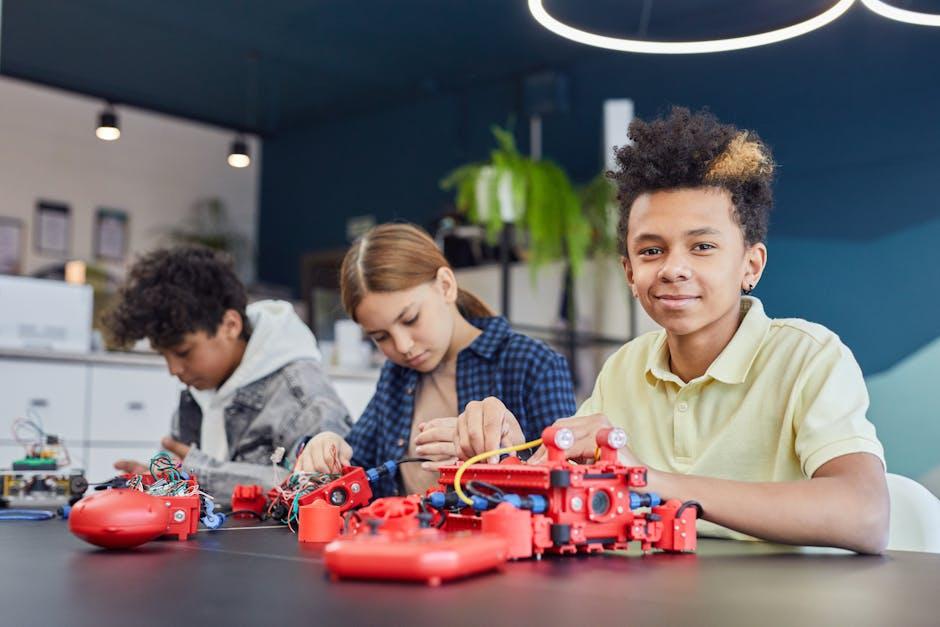
Understanding the Core Components of Critical Thinking
At the heart of nurturing critical thinking in your child lies the ability to dissect complex problems and evaluate information objectively. This intellectual process can be broken down into several core components that can be cultivated through everyday interactions and activities. Understanding these components is essential in fostering a mindset that thrives on inquiry and reason.
- Analysis: Encourage your child to break down information into smaller parts, examining each element critically. This involves questioning the source, context, and relevance of information.
- Interpretation: Guide them to understand and explain information by identifying underlying meanings and patterns. This can be enhanced through discussions that require them to articulate their thoughts clearly.
- Evaluation: Teach them to assess arguments, identifying biases, assumptions, and evidence. Evaluating the strength and validity of claims empowers them to make informed decisions.
- Inference: Promote the skill of drawing logical conclusions based on available evidence. Encourage them to ask “what if” questions to explore potential outcomes.
- Reflection: Instill a habit of self-reflection where they consider their own thought processes and decisions, learning from past experiences to improve future judgments.
By integrating these components into daily life, children can develop a robust framework for thinking critically, equipping them to navigate the complexities of the world with confidence and clarity.
The Role of Questioning in Enhancing Cognitive Abilities
Encouraging children to ask questions is a powerful tool in nurturing their cognitive development. When children engage in questioning, they are not just seeking answers; they are learning to analyze, synthesize, and evaluate information. This process is fundamental in developing critical thinking skills. By fostering an environment where curiosity is rewarded, children learn to approach problems with a mindset geared towards exploration and discovery.
- Stimulating Curiosity: Questions ignite a child’s natural curiosity and drive them to explore subjects more deeply.
- Developing Analytical Skills: Through questioning, children learn to break down complex concepts into manageable parts.
- Enhancing Problem-Solving: By framing questions, children learn to identify problems and explore various solutions.
- Building Confidence: Encouraging questions helps children become more confident in their thought processes and opinions.
Empowering children to question not only enhances their cognitive abilities but also prepares them for the challenges of an ever-changing world. By integrating questioning into everyday learning, parents and educators can significantly contribute to a child’s intellectual growth.
Creating an Environment That Stimulates Intellectual Curiosity
Inspiring a child to explore the world with a questioning mind begins with the creation of a rich and nurturing environment. This can be achieved by surrounding them with diverse learning materials and resources that challenge their understanding and spark their imagination. Consider curating a selection of age-appropriate books, interactive science kits, and puzzles that are not only educational but also enjoyable. Encourage exploration by organizing regular visits to museums, science centers, or nature reserves. Such experiences can ignite a passion for learning and provide real-world contexts for theoretical concepts.
Additionally, fostering a culture of inquiry at home is crucial. Engage your child in discussions about current events, historical events, or even daily observations. Ask open-ended questions that stimulate thought and analysis, such as “What do you think would happen if…?” or “Why do you believe that occurs?”. Be sure to listen actively and provide positive reinforcement to their responses. Promote critical dialogue by encouraging them to express their opinions and back them up with reasoning. This not only boosts their confidence but also hones their ability to think independently and critically.
- Provide access to diverse learning resources
- Organize educational outings and experiences
- Encourage open-ended questioning and discussions
- Promote reasoning and expression of ideas
Practical Exercises to Foster Analytical Skills in Children
Engaging children in activities that require them to think critically can significantly enhance their analytical skills. Incorporate puzzles and strategy games into their routine. Puzzles like jigsaw or Sudoku encourage problem-solving and logical thinking. Strategy games, such as chess or checkers, help children learn to plan ahead and anticipate consequences. These activities not only make learning fun but also teach patience and perseverance.
Another effective approach is to involve children in everyday decision-making. Encourage them to weigh the pros and cons of simple choices, like selecting what to wear based on the weather or deciding how to organize their homework schedule. This practice nurtures their ability to evaluate information and make informed decisions. Additionally, prompt them with open-ended questions to stimulate deeper thinking. Consider asking, “What would happen if…?” or “Why do you think…?” to encourage them to explore different perspectives and articulate their reasoning.
- Interactive storytelling: Craft stories together and ask your child to predict what might happen next.
- Science experiments: Conduct simple experiments at home and discuss the outcomes and processes.
- Role-playing: Engage in role-play scenarios to help them understand different viewpoints and develop empathy.