
In recent years, the significance of early childhood education has garnered increasing attention from educators, policymakers, and researchers alike. As the foundational stage of human development, early childhood education plays a pivotal role in shaping an individual’s cognitive, social, and emotional capabilities. This article delves into the myriad benefits that early childhood education imparts on lifelong learning, drawing from a robust body of empirical evidence and expert analyses. By examining the long-term impacts of quality early educational experiences, we uncover how they contribute to enhanced academic performance, improved social skills, and greater adaptability in an ever-evolving global landscape. With a confident understanding of these benefits, stakeholders can make informed decisions to foster environments that nurture young minds and lay the groundwork for continuous learning throughout life.
Foundation for Cognitive Development and Critical Thinking Skills
Early childhood education plays a pivotal role in shaping a child’s cognitive development and enhancing critical thinking abilities. During these formative years, children are highly receptive to new information and experiences, which lay the groundwork for complex cognitive processes. This educational foundation is instrumental in developing skills such as:
- Problem-solving: Engaging in activities that require critical thinking and decision-making helps children learn how to approach and solve problems effectively.
- Logical reasoning: Through structured play and learning exercises, children begin to understand cause-and-effect relationships, fostering logical thinking.
- Memory and retention: Early education introduces methods for information retention, enabling children to recall and apply knowledge in various contexts.
- Creativity: Exposure to diverse stimuli encourages innovative thinking and the ability to view situations from multiple perspectives.
These cognitive skills, nurtured during early childhood, serve as the bedrock for lifelong learning. As children grow, they leverage these abilities to navigate more complex educational environments and real-world scenarios, ultimately equipping them with the adaptability and resilience necessary for success in a rapidly changing world.

Fostering Emotional Intelligence and Social Skills from a Young Age
Emotional intelligence and social skills are the cornerstones of effective communication and personal development, and nurturing these from a young age can lead to profound benefits. Early childhood education plays a pivotal role in this development, as it provides children with the tools to understand and manage their emotions, as well as to interact positively with others. Through structured activities and guided play, children learn to recognize and express their feelings in a healthy manner, which is crucial for forming strong interpersonal relationships. Moreover, these early experiences foster empathy, allowing children to appreciate diverse perspectives and cultivate a sense of community.
- Improved Communication: Children learn to articulate their thoughts and emotions, enhancing their ability to connect with peers and adults.
- Conflict Resolution Skills: Early education teaches children how to navigate disagreements constructively, promoting harmony in group settings.
- Increased Empathy: By understanding and sharing the feelings of others, children develop compassion and kindness.
- Self-Regulation: Learning to control impulses and delay gratification helps children in making thoughtful decisions.
These foundational skills not only enhance a child’s social interactions but also set the stage for academic success and lifelong learning. By investing in emotional and social development from the start, we equip children with the resilience and adaptability needed to thrive in an ever-changing world.
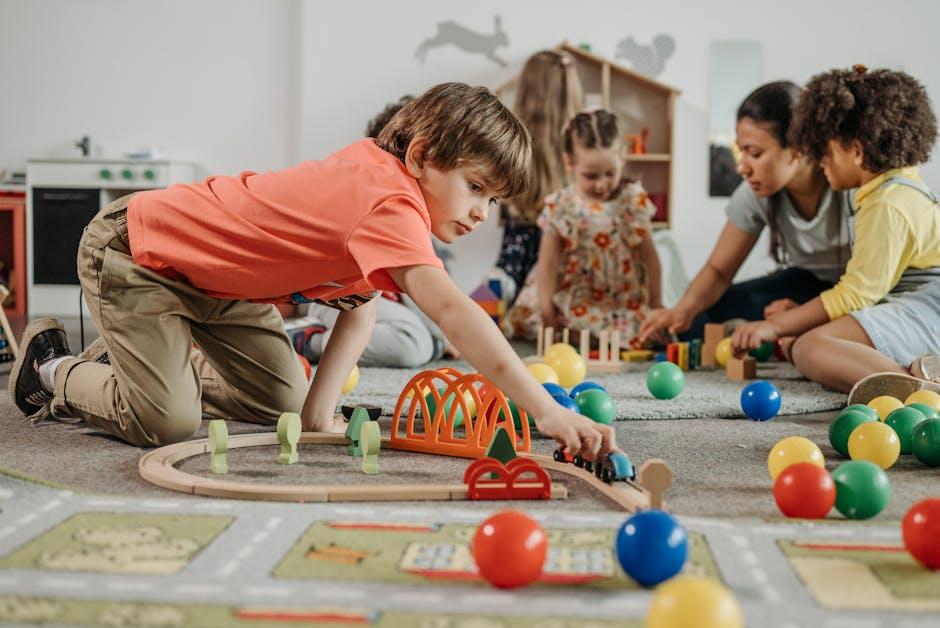
Enhancing Creativity and Problem-Solving Abilities Through Play-Based Learning
Integrating play into early childhood education is a powerful tool for fostering creativity and honing problem-solving skills. Play-based learning encourages children to explore, experiment, and engage with their environment in a way that is both natural and enjoyable. By allowing children the freedom to create and imagine, they learn to think outside the box and develop innovative solutions to challenges. This method nurtures an intrinsic motivation to learn, laying a strong foundation for lifelong learning. In a playful environment, children can experiment with different scenarios, which enhances their ability to approach problems from various angles.
- Critical Thinking: Engaging in play allows children to test hypotheses and explore outcomes, cultivating their analytical skills.
- Emotional Intelligence: Through role-playing and social interactions, children develop empathy and learn to navigate complex social dynamics.
- Adaptability: Play requires children to adjust to new rules and scenarios, fostering flexibility and resilience.
These skills are not only crucial for academic success but also for personal and professional achievements later in life. As children build these competencies through play, they are better equipped to tackle future challenges with confidence and creativity.
Recommendations for Parents and Educators to Maximize Early Educational Outcomes
To ensure children reap the full benefits of early childhood education, both parents and educators must collaborate effectively. For parents, it’s essential to create a home environment that complements and extends learning experiences. This can be achieved by:
- Encouraging curiosity and asking open-ended questions.
- Providing access to a variety of books and educational materials.
- Establishing a consistent routine that includes time for both structured and unstructured play.
Educators play a pivotal role in nurturing a child’s love for learning. To maximize educational outcomes, they should focus on:
- Creating an inclusive classroom environment that celebrates diversity.
- Implementing play-based learning strategies to enhance cognitive and social skills.
- Building strong relationships with parents to ensure a consistent support system.
By fostering a collaborative and supportive approach, both at home and in educational settings, we can significantly enhance early educational outcomes, laying a robust foundation for lifelong learning.